


Why a Low-Floor Vehicle Is a Smart Investment for Your Business
August 14, 2026
When you're investing in a new commercial vehicle, it's easy to focus on the most obvious details.
You'll probably ask how much can it carry? How much will it cost? Is it reliable? Will it look professional when it arrives at a customer’s premises or construction site?
These are all important questions, of course, but the height of the vehicle’s load floor can have a much bigger impact on your daily operation than you might initially think.
For businesses that regularly transport tools, plant machinery, equipment, materials or traffic management products, loading and unloading can take place several times every day. If the load area is difficult to access, every one of those movements can become slower, harder and potentially less safe.
A low-floor vehicle is designed to bring the load-bearing floor closer to the ground than you would find on a traditional commercial vehicle. This creates a lower loading height and, where ramps are used, a shallower loading angle.
It sounds like a fairly simple change, but it can completely transform how practical a vehicle is to use.
From making heavy equipment easier to load to reducing manual handling and helping teams complete more work each day, here's why a low-floor commercial vehicle could be a smart long-term investment for your business.
What Is a Low-Floor Commercial Vehicle?
As mentioned earlier, a low-floor commercial vehicle has a load area that sits significantly closer to the ground than the body of a conventional chassis cab.
On a traditional commercial vehicle, the chassis rails can cause the body and load platform to sit relatively high. This may not be a major problem when lightweight goods are being loaded using a forklift, but it can create difficulties when employees need to lift items manually or move wheeled and tracked machinery up a ramp.
A low-floor chassis gets around this issue – it creates easier access, a reduced ramp gradient and a more practical working height for drivers and operators.
At AKFS we pioneered low-floor vehicle conversions using the AL-KO low-floor chassis and continue to develop purpose-built designs shaped around the requirements of businesses working in demanding sectors.
The result is not simply a standard vehicle with a slightly lower body. To be truly fit for purpose, a genuine low-floor conversion should be designed as a complete working vehicle, taking into account its payload, body construction, access points, storage, safety equipment and the loads it will carry.
Easier Loading and Unloading
One of the clearest advantages of a low-floor vehicle is that it makes loading and unloading easier.
When a vehicle’s load bed is high, your team may need to lift tools and equipment above a comfortable working height. Wheeled machinery may require longer, steeper ramps, while tracked equipment can be more challenging to move onto the vehicle safely. By lowering the floor of the vehicle, you can reduce the height that items need to travel.
For businesses transporting plant equipment, this is particularly valuable, as mini diggers, tracked dumpers, compactors, ride-on mowers and other machinery can be heavy, awkward and difficult to manoeuvre.
At the same time, a shallower ramp angle creates a smoother transition between the ground and the vehicle. This can make operators feel more confident when loading machinery and reduce the risk of the equipment catching or grounding as it moves across the ramp.
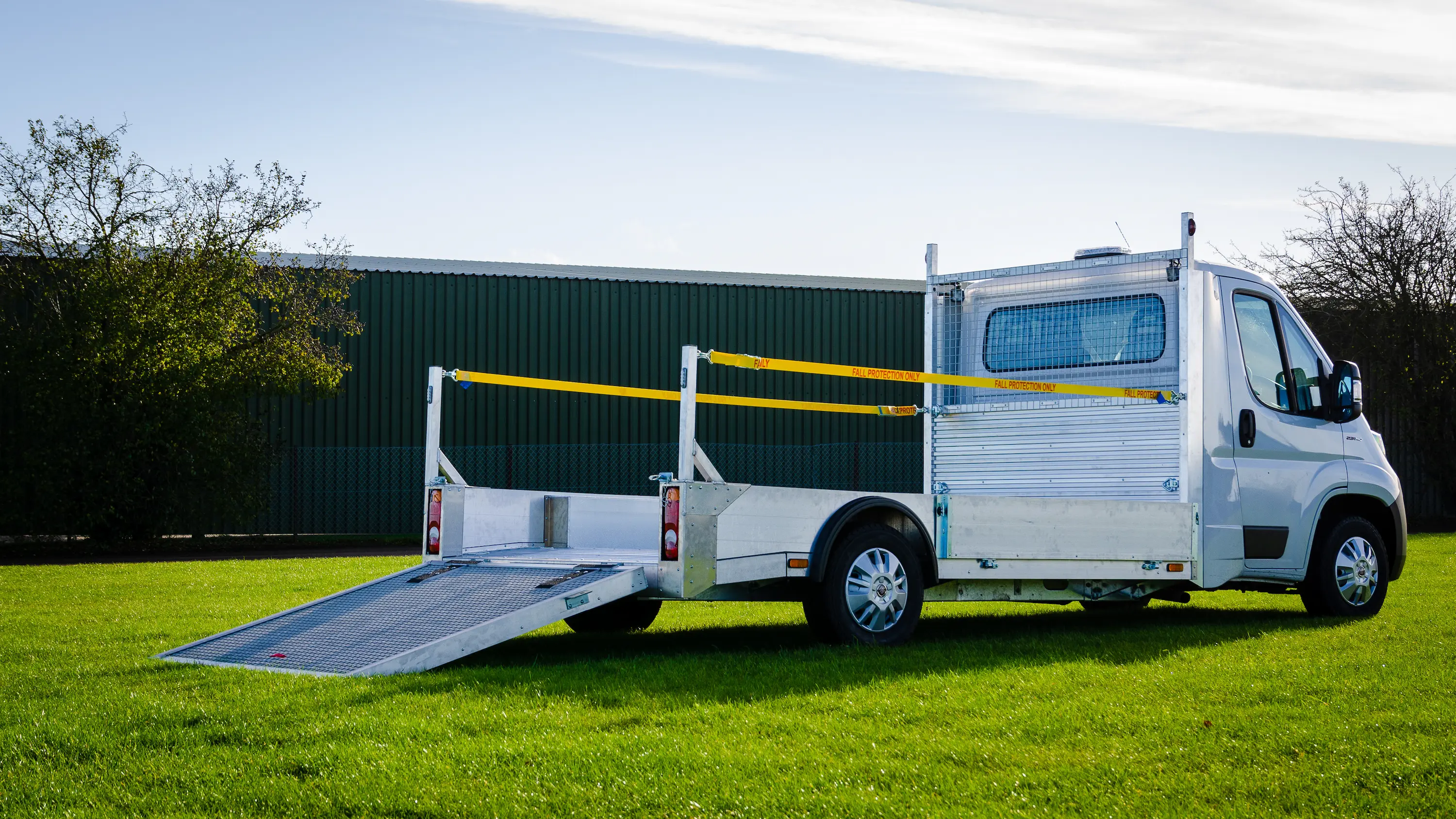
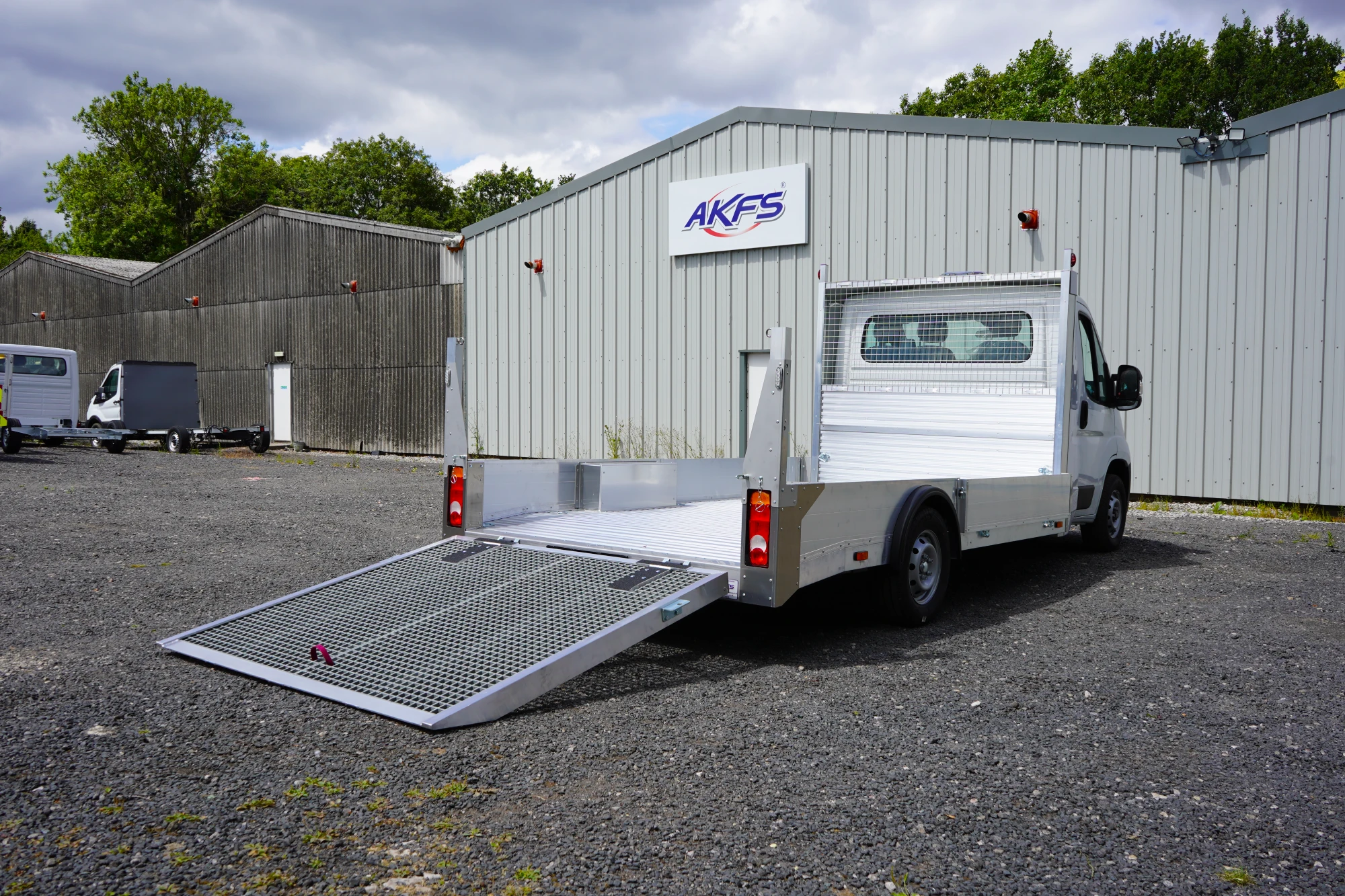
By way of example, the AKFS Plant & Go® is a purpose-built low-floor vehicle designed to transport plant machinery, maintenance tools and equipment to construction sites, residential locations and commercial projects.
Its low loading height, beavertail design and removable ramps help make it suitable for carrying equipment such as mini diggers, tracked dumpers and larger ride-on mowers.
Even when machinery is not involved, a lower working height can simplify the everyday movement of signs, barriers, tools, bins, containers and other equipment.
Over the course of a working week, those small improvements can save a considerable amount of time and effort.
Reduced Manual Handling
Manual handling is part of everyday life in many industries, but poorly planned vehicle access can make it more difficult than it needs to be.
Repeatedly lifting heavy or awkward equipment onto a high vehicle bed can place additional strain on your team. And climbing in and out of vehicles throughout the day can become tiring, particularly when teams are working long shifts or operating in difficult weather conditions.
A low-floor design can reduce the amount of lifting required and create a more natural working height, enabling people to slide, roll or guide equipment into position.
This doesn't remove the need for safe working practices, training or appropriate lifting equipment but it can help you design some of the avoidable strain out of the task.
For businesses in traffic management, construction, landscaping, local authority services and plant hire, that can make a noticeable difference.
We've heard from customers using AKFS low-floor vehicles how the reduced body height has supported manual handling and team safety during the deployment of traffic management equipment.
When the same tasks are being completed many times a day across an entire fleet, even a relatively small reduction in physical effort can become an important operational benefit.
Faster Turnaround Between Jobs
Loading time might only represent a small part of each job, but those minutes add up quickly.
Imagine a team that visits several locations during a shift. At every stop, employees need to unload equipment, complete the work and reload the vehicle before moving on.
If the vehicle is difficult to access, each stop may take longer than necessary.
A low-floor vehicle can make this process more straightforward. Equipment can be reached more easily, machinery can be moved using a gentler ramp and employees may spend less time climbing in and out of the load area.
This can help teams get on the road sooner and complete their scheduled work more efficiently.
For plant and tool hire businesses, faster loading can also improve customer service.
Hire equipment often needs to be delivered or collected within agreed time slots. A vehicle that is quick and easy to operate can help drivers complete more efficient rounds and respond to changing customer requirements.
The benefit is not necessarily about rushing employees.
It is about removing unnecessary difficulty from routine tasks, allowing people to spend more of their time doing productive work.
A Safer Working Environment
Commercial vehicles frequently operate in environments where space is limited and hazards need to be carefully managed.
Traffic management teams, for instance, may work on busy roads. Construction teams might load equipment on uneven sites and landscapers may operate in residential areas, parks or restricted access locations.
In these situations, a vehicle that is easier to use can support safer working practices.
By way of example, a lower load floor can reduce the need to climb onto the vehicle. Equally, a reduced ramp angle can make machinery easier to control and better access can help teams to maintain a more stable position when moving tools and equipment.
Of course, the vehicle still needs to be supported by suitable safety features.
Depending on how it will be used, these may include:
- Secure load restraint points
- High-visibility markings
- Reversing cameras
- Warning beacons
- Additional work lights
- Side access
- Non-slip flooring
- Onboard weight monitoring
- Tool storage
- Safety rails or barriers
The exact specification you land on should always reflect the vehicle’s role and operating environment.
Take, for example, a Plant & Go® produced by AKFS for a council, which was specified with four-way cameras and a full onboard weight indication system to support visibility, safety and compliance.
To get the best result, it's vital to involve your vehicle converter early. The body, chassis and safety equipment should work together as one complete solution rather than being considered separately.
Improved Accessibility for Your Team
Your fleet may be used by employees with different heights, levels of strength and physical requirements.
A high load bed can require employees to stretch, climb or repeatedly step up and down and, over a full shift, this can become tiring.
But a low-floor design creates a more accessible working environment for a wider range of operators. It can also make it easier to access tools stored near the side or rear of the vehicle, reducing the need to climb fully onto the load bed whenever a small item is needed. This can be especially useful for teams handling high volumes of equipment, including traffic cones, signs, barriers, tools or maintenance products.
Getting to the right vehicle specification means asking the people who will actually use the vehicle what would make their working day easier.
At AKFS we've come to recognise that drivers and operators will often identify practical issues that are not obvious from a vehicle brochure.
Their feedback can help you choose the right access points, storage layout, ramp arrangement and working height.
Greater Flexibility Across Different Jobs
A well-designed low-floor vehicle can be adapted for many different industries and applications.
It might be used for transporting compact plant, carrying grounds maintenance equipment, deploying traffic management products or supporting recycling and local authority services.
Different body designs, toolboxes, ramps, gantries and storage options can be added according to the work the vehicle needs to perform.
AKFS’ low-floor range includes vehicles created for plant and tool hire, construction, traffic management and other specialist applications. Our Drop & Go® traffic management vehicle is designed to combine a compact footprint with efficient equipment deployment and access to areas where larger vehicles may be less practical.
This flexibility can help you create a fleet that is closely matched to your contracts rather than relying on a generic vehicle and adapting your working practices around its limitations.
A purpose-built vehicle can also complete several closely related tasks.
For example, a plant transport vehicle could include secure tool storage alongside its main machinery area, helping your team carry everything required for a job in one trip.
The aim is not to make one vehicle responsible for every task in the business, it's to create a specification that supports the work it will perform most frequently.
Better Use of Available Payload
Payload should be one of the first things you discuss when buying any commercial vehicle.
Every vehicle has a limit on the weight it can legally carry. The weight of the chassis, body conversion, fuel, driver, passengers, tools and equipment all contribute to the total.
Low-floor vehicles often need to balance accessibility with carrying capacity.
This is where specialist engineering and lightweight body construction become important. A well-designed conversion should provide the strength and durability required for commercial use without adding unnecessary weight.
Before finalising your vehicle, be realistic about what it will carry.
Include the weight of:
- Machinery
- Tools
- Ramps
- Storage compartments
- Passengers
- Fuel
- Safety equipment
- Towing equipment
- Everyday materials and supplies
You should avoid basing your calculations on the lightest possible day. Reaching the right specification means securing enough usable payload for normal working conditions while leaving a sensible margin.
Working off an unrealistic payload can lead to overloading and this, in turn can affect braking, handling, tyre wear and vehicle reliability. It may also lead to fines, penalties and unplanned disruption.
A vehicle that is easy to load should still be loaded responsibly.
Suitable for Restricted and Urban Locations
Low-floor vehicles can also be designed around compact and agile chassis, making them useful for businesses that need to work in restricted locations.
Urban projects often involve narrow roads, limited parking, tight site entrances and busy surroundings. A large vehicle may carry more equipment, but it can also be difficult to position safely.
To get around this issue, AKFS’s Drop & Go® Urban vehicle has been developed specifically for the challenges of inner-city traffic management, building on the original low-floor Drop & Go® design. As a compact low-floor vehicle it offers a useful balance between load capacity, accessibility and manoeuvrability. For businesses working across a mixture of urban, residential and commercial locations, this makes the vehicle more versatile.
Before choosing a chassis, think about where it will spend most of its time.
Consider:
- Overall vehicle length
- Vehicle width
- Turning circle
- Height restrictions
- Weight restrictions
- Parking availability
- Site entrances
- Typical road conditions
- Motorway mileage
- Off-road or uneven access
Remember that opting for the largest vehicle available is not always your best option.
The smartest investment is the vehicle that can safely carry the required load while remaining practical for the routes and locations your teams regularly encounter.
A More Professional Fleet
Your commercial vehicles are often one of the most visible parts of your business.
They are seen by customers, contractors, local authorities and members of the public, and their appearance and operation can influence how people perceive your company.
A purpose-built low-floor vehicle can help create a professional impression.
Rather than arriving with equipment squeezed into an unsuitable van or relying on complicated loading arrangements, your team has a vehicle designed for the job.
Tools can be stored securely. Machinery can be loaded correctly. Branding can be applied clearly and employees can operate the vehicle in an organised way.
This is particularly valuable for businesses bidding for larger contracts or working with national organisations, local authorities and principal contractors.
A modern, well-presented fleet demonstrates that you are prepared to invest in your people, your equipment and the quality of your service. It can also support employee pride, attraction and retention.
People generally prefer to work with vehicles that are reliable, practical and professionally presented. A vehicle that makes their working day easier can become a valuable part of attracting and retaining experienced drivers and operators.
Lower Whole-Life Operating Costs
A low-floor vehicle may require a greater initial investment than a basic, off-the-shelf commercial vehicle but the purchase price only tells part of the story.
The real cost of a vehicle includes:
- Finance or purchase costs
- Fuel or charging
- Servicing
- Repairs
- Insurance
- Vehicle downtime
- Employee time
- Additional journeys
- Replacement equipment
- Expected resale value
A cheaper vehicle that is difficult to use may cost you more over its working life.
If loading takes longer, employees make extra trips or equipment is regularly damaged because the vehicle is unsuitable, these costs can quickly outweigh the initial saving.
A purpose-built low-floor vehicle can support better productivity every day, by helping teams load more efficiently, complete more jobs, reduce manual handling and transport the right combination of equipment in one journey.
These are operational savings rather than headline discounts, but they can deliver much greater value over several years.
So, when you're comparing vehicles, always consider the total cost of ownership and the value each specification can bring to your business.
Built Around Your Operation
The biggest advantage of working with a specialist vehicle converter is the opportunity to create a vehicle around your business.
Rather than simply choosing a standard body from a brochure, you can discuss how the vehicle will be used and which features will make the greatest difference.
Think about:
- What the vehicle will carry
- How equipment will be loaded
- How many people will use it
- Where it will operate
- How often it will stop
- Which tools need secure storage
- What safety equipment is required
- Whether it will tow
- The expected annual mileage
- Your future contracts and growth plans
At AKFS, we develop our low-floor vehicle concepts through collaboration with customers and feedback from the industries using them every day.
This practical approach can help you avoid paying for features you don't need while ensuring the vehicle includes the details that genuinely support your operation.
Is a Low-Floor Vehicle Right for Your Business?
A low-floor vehicle may be a particularly strong investment when your teams regularly:
- Load and unload heavy equipment
- Transport wheeled or tracked plant
- Handle tools and materials manually
- Make several stops during each shift
- Work in restricted or urban locations
- Deploy traffic management equipment
- Carry grounds maintenance machinery
- Need quick access to tools and storage
- Want to reduce unnecessary lifting and climbing
Figuring out if this type of vehicle is right for your desired application means looking, first of all, at the work it needs to support, rather than the chassis or body style.
Where regular access, equipment handling and operational efficiency are important, a low-floor design can offer clear advantages over a traditional commercial vehicle.
Invest in a Vehicle That Makes Work Easier
A commercial vehicle should do more than transport equipment from one location to another.
It should help your team work safely, efficiently and professionally.
By lowering the load floor, you can make equipment easier to access, reduce ramp angles, simplify manual handling and improve turnaround times between jobs.
Those benefits are felt every day, not just when the vehicle first arrives.
At AKFS, we have more than 30 years of experience creating durable commercial vehicle conversions for sectors including construction, plant and tool hire, traffic management, transport and grounds maintenance.
Our low-floor vehicles are developed around real working requirements, with practical options for storage, access, payload management and safety equipment.
Whether you need a Plant & Go®, a Drop & Go® or a more bespoke low-floor conversion, our product specialists can help you explore the available options and develop a vehicle that works for your team.
Speak to us to discuss your requirements or download one of our vehicle brochures to learn more about our low-floor commercial vehicle range.
Speak to an AKFS product specialist or download one of our commercial vehicle brochures to explore the range.
You Might Also Be Interested In
.webp)
.webp)

Get In Touch With A Product Specialist Today
Here at AKFS our team of professionals are ready to answer any queries you may have. Get in touch or download a brochure to find out more today.
